The surveillance feed is ending. Here's what replaces it.
Right now, your news feed knows you — but it's not working for you.
Every article you linger on, every alert you click at 11pm, every anxious refresh during a market dip — that data is being harvested to sell you something. The algorithm is brilliant. It's just loyal to the wrong person.
That is going to change.
The problem with "personalization" today
Today's personalization optimizes for your engagement, not your understanding.
Open any major news app and you'll get more of whatever kept you scrolling yesterday — not what you actually need to know. Read one article about a political controversy and your feed fills with ten more. Check markets during a crash and the app learns to lead with volatility because it keeps you coming back.
The result: you feel informed but often just feel anxious. You've spent 40 minutes on your phone and can't name three things you learned.
This isn't accidental. It's the business model.
What changes in the 2040s
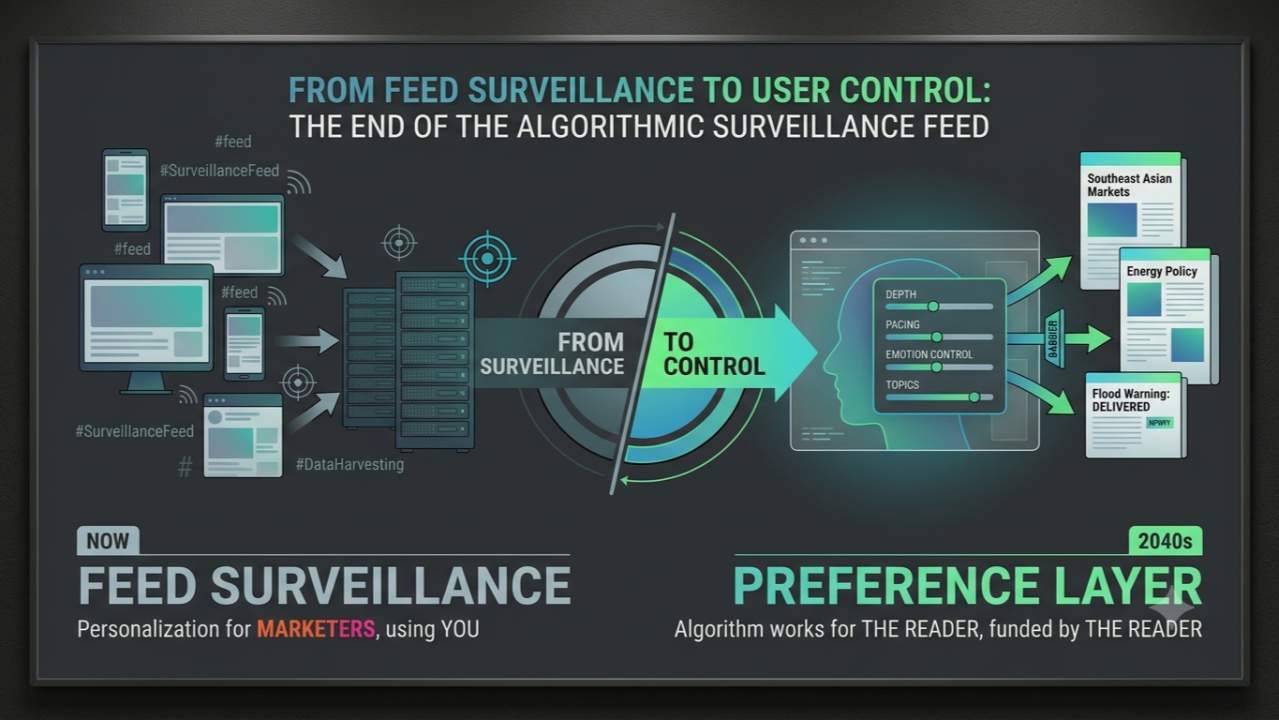
By 2040, a reader-controlled preference layer will sit above the algorithm — not below it. Instead of the platform deciding what's "relevant" to you, you set the terms.
What that looks like in practice:
Today, you open a news app and get whatever the algorithm decided you'd click. In 2040, you'll have told the system: I want 10 minutes of news in the morning, focused on energy policy and Southeast Asian markets, with politics summarized — not amplified. It delivers exactly that. Nothing more.
Today, a celebrity scandal trends and your entire feed shifts toward it. In 2040, if that topic isn't in your profile, it simply doesn't appear. Not suppressed — just not invited.
And breaking news — today a design weapon that interrupts you before anyone even knows what happened — will be something you control. You'll train a personal urgency classifier that makes four decisions on every breaking story:
Reaches you immediately because it genuinely affects you. A flood warning in your city. A regulatory change in your industry. A market move in a stock you hold. You get it the moment it breaks.
Real news, but not urgent for you. A political crisis in a country you don't follow closely arrives in your next scheduled read, with full context, instead of hijacking your morning as a half-formed alert.
You've told the system certain topics spike your anxiety without adding to your understanding. A global health scare gets reported to you as data and policy response — same facts, stripped of the dread framing that keeps you refreshing for hours.
You've already read enough on this story. The system recognises you've consumed three pieces on the same topic and stops treating it as breaking news for you, even if it's still trending everywhere else.
You can see exactly how it's classifying stories and override it anytime. The transparency is the feature.
This is the key distinction: a filter bubble is what happens when the platform decides to narrow your world. A preference layer is what happens when you decide how the world reaches you — and the system respects that.
What happens to ads
This is where it gets uncomfortable for the industry — and liberating for everyone else.
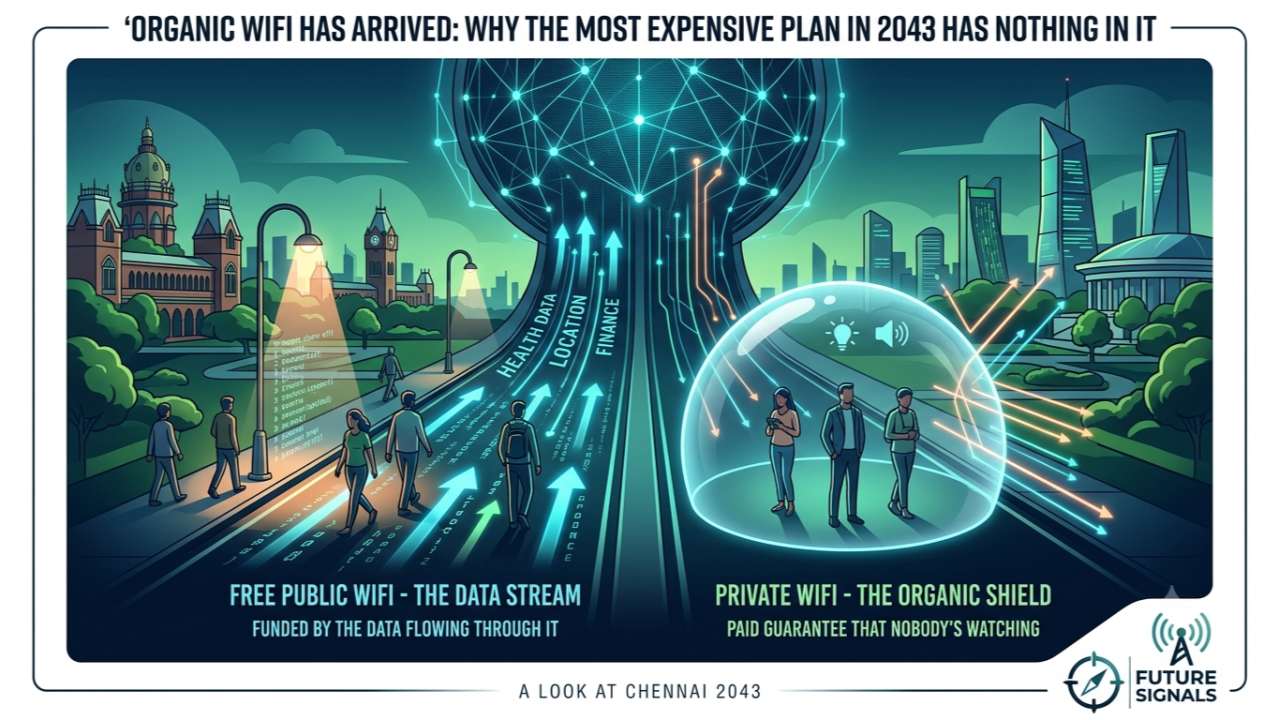
Today, your news reading behavior is a gold mine. Every topic you follow, every article you finish, every emotional reaction you have to a headline is logged, profiled, and sold to advertisers who use it to target you with uncanny precision.
In 2040, the architecture will make that impossible — by design.
The system that curates your news will know you in the moment of curation, and then forget. No persistent profile. No data broker can buy it. No breach can leak it. The advertiser targeting you based on a news story you read six months ago? That pipeline won't exist.
What replaces it is simpler and older: ads placed against topics, not against people. An EV brand advertises next to energy policy stories. A fintech company appears in market coverage. Context, not surveillance.
Less precise for advertisers. Much better for readers. The economics will take time to adjust — but they will.
The bottom line
The 2020s confused personalization with surveillance. Every "for you" feed was really a "for our advertisers, using you" feed.
The shift coming in the 2040s is straightforward: the algorithm will work for the reader, funded by the reader, accountable to the reader.
You'll get news that fits your life — your time, your depth, your pace, your emotional bandwidth on a given morning. And when you close the page, nothing about that session will be used to sell you something tomorrow.
Your attention is not inventory. In the 2040s, the news will finally know the difference.
#FutureOfIndia#IndiaFuture#VikshitBharat#PreferenceLayer#EndOfSurveillanceFeed#UserControlledNews#FutureOfMedia